2026 FinTech Predictions: Insights from Susan O'Neill of Paygentic
Paygentic CEO Susan O'Neill shares her predictions on agentic AI, revenue integrity risks, and the shift from human workflows to AI-driven financial services in 2026.
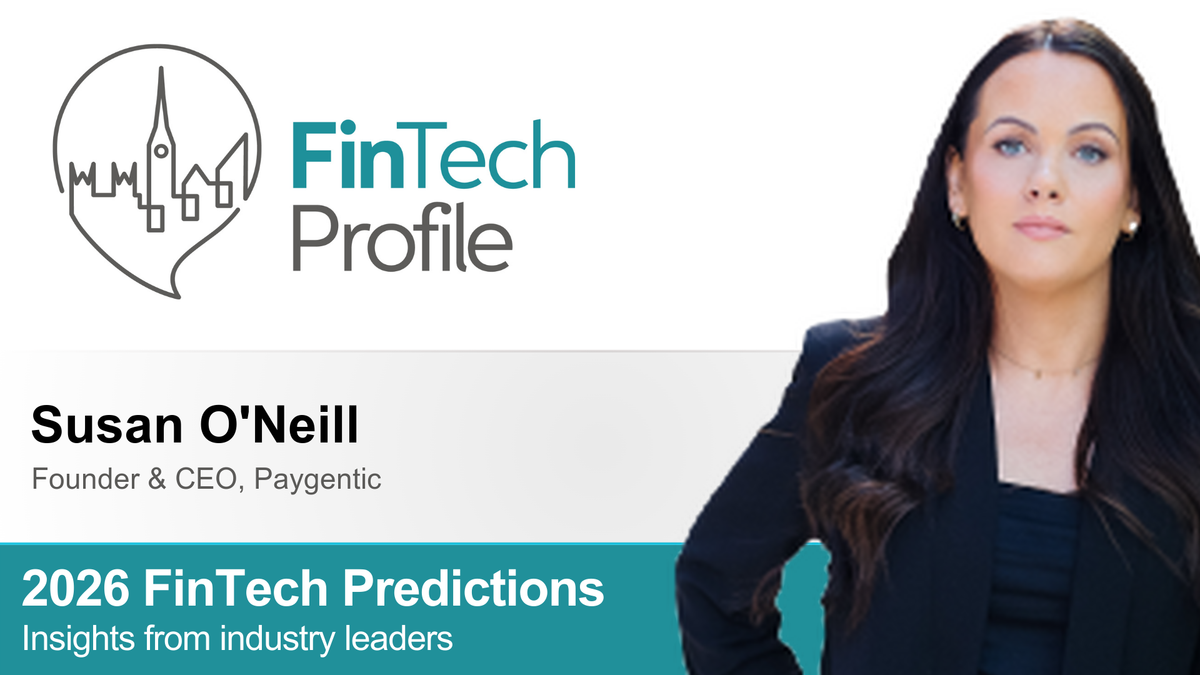
Today we're featuring Susan O'Neill, Founder & CEO of Paygentic, an enterprise-grade pricing, metering, billing, and payments platform designed for agentic software.
Susan shares her insights on how agentic AI will reshape financial services, the emerging challenges around revenue integrity, and what banks must prioritise to remain competitive as AI agents take on revenue-critical work.
Over to you Susan - my questions are in bold:
What's the biggest shift you expect across financial services in 2026?
The biggest shift will be the move from "digital workflows with humans in the loop" to revenue‑critical flows where AI agents handle significantly more of the work. Instead of just using AI for decision support or chatbots, banks and fintechs will deploy agents that can execute multi tasks to originate, monitor, and service products end‑to‑end, from KYC to collections - with humans at key decision points. That changes how risk is managed, how products are priced, and how revenue is recognised, because you're increasingly measuring work done by software rather than headcount.
Which emerging technology will have the most practical impact on banks and the FinTechs that support them?
Agentic AI, multi‑agent systems that can plan, act, and coordinate across systems will have the most practical impact. It is not just another model upgrade; it is a different operating model for the institution. When agents can open accounts, triage disputes, restructure loans, and reconcile payments, you suddenly need infrastructure that can meter and price "units of work" instead of logins. The banks that pair agentic AI with robust billing and data foundations will be able to launch new products faster and monetise them in much more granular, customer‑aligned ways.
What customer behaviours or expectations will most challenge banks and financial service providers?
Customers will expect three things simultaneously: real‑time service, radical transparency, and flexible pricing. On the corporate side, CFOs and treasury teams are no longer willing to accept opaque fee schedules or pay for unused capacity; they want to see exactly what they're paying for, mapped to events, volumes, and outcomes. On the consumer side, people are getting used to "on‑demand everything" and will bring the same expectations to credit, payments, and wealth products. The challenge for banks is that their legacy product, billing, and data stacks were not designed for that level of granularity or explainability.
What risks or blind spots do you think the industry is underestimating as we move into 2026?
One major blind spot is revenue integrity in an AI‑heavy world. Everyone is focused on model risk and compliance - and rightly so - but far fewer institutions are asking: "Are we actually billing correctly for the value these AI and agentic services we are creating?" As pricing gets more complex (tiers, usage, outcomes, commitments, credits), the risk of silent revenue leakage increases dramatically. Another under‑appreciated risk is customer trust around AI‑driven fees; if bills cannot be reconciled to clear usage or outcomes, you erode confidence even if the underlying product is excellent. Both issues point back to the need for auditable, fine‑grained metering and billing infrastructure.
If you were advising a bank's leadership team today, what strategic priority should they focus on to stay competitive in 2026 and beyond?
They should focus on making agentic AI economically and operationally usable at scale, not just technically possible. In practice, that means two things. First, redesign a few core value streams so AI agents handle most of the work under robust human‑in‑the‑loop and model‑risk controls, reflecting what leading banks and vendors are already piloting in 2025. Second, build the data and billing foundations to measure what those agents do in economic terms - units of work, risk, and value - and link that to transparent pricing and reporting that customers and supervisors can actually understand. Banks that get this "AI + economics + governance" triangle right will be the ones that turn today's pilots into defensible, scalable advantage in 2026 and beyond.
Thank you Susan! You can connect with Susan on her LinkedIn Profile and find out more about the company at paygentic.io.