2026 FinTech Predictions: Insights from Raman Korneu of myTU
myTU's CEO shares predictions on AI-driven banking, invisible finance, and why fintechs must prioritise profitable growth over user acquisition in 2026.
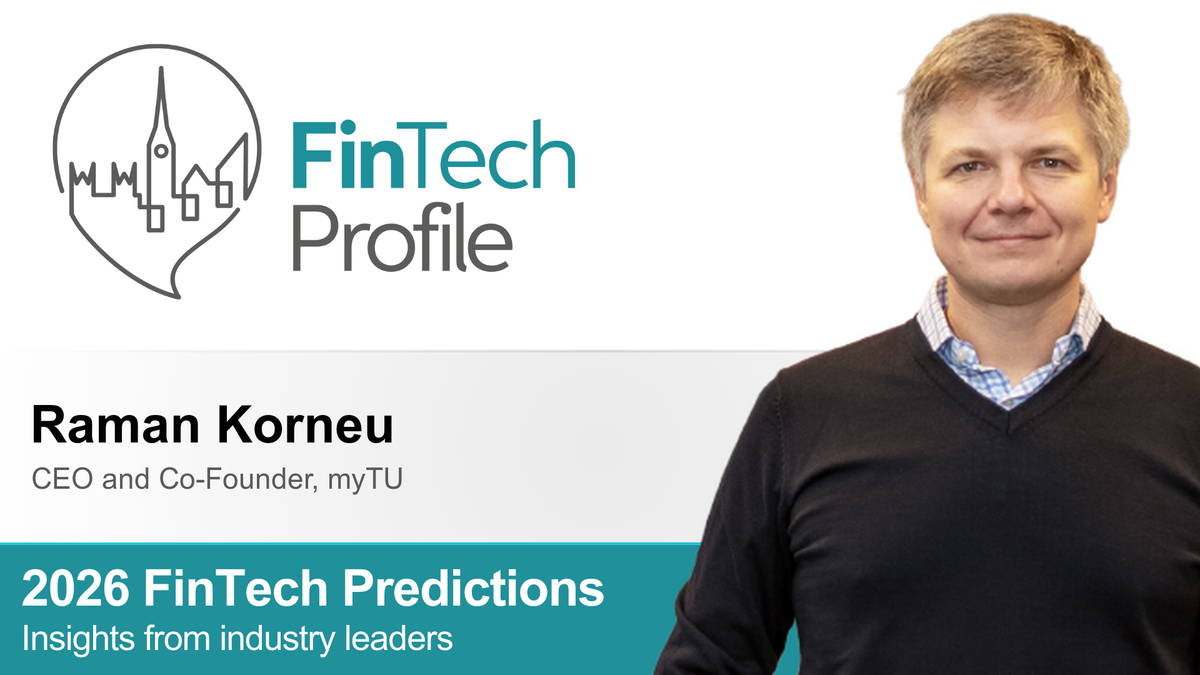
We spoke with Raman Korneu, CEO and Co-Founder of myTU, a fully automated, AI-native and cloud-first digital bank offering smart, secure, and affordable financial services. Raman shares his perspective on the pivotal shifts facing financial services, from the evolution of AI infrastructure to the rising customer demand for invisible, embedded finance.
Over to you Raman - my questions are in bold:
What's the biggest shift you expect across financial services in 2026?
The transition from "growth at all costs" to intelligent, profitable growth. After the hype cycles of previous years, 2026 will be defined by investors demanding clear paths to profitability. Fintechs will no longer be judged by user count alone, but by their ability to deliver tangible, efficient value.
Which emerging technology will have the most practical impact on banks and the FinTechs that support them?
Preventative AI and real-time payments (RTP). First of all, AI is shifting from a "feature" to the "foundation," specifically through Explainable AI that can automate loan approvals and compliance (KYC/AML) while remaining auditable for regulators. On the other hand, RTP, supported by data-rich standards like ISO 20022, will move from aspirational to mission-critical, enabling instant global transfers and supply chain payments.
What customer behaviours or expectations will most challenge banks and financial service providers?
The demand for "invisible finance" and hyper-personalisation. Customers no longer want to "go to the bank"; they expect financial services to be contextually relevant and seamlessly integrated into the platforms they already use (embedded finance). If a bank isn't where the customer is - be it a travel app or a business management system - it will become obsolete.
What risks or blind spots do you think the industry is underestimating as we move into 2026?
The rigidity of legacy infrastructure and the speed of regulatory modernisation. Many institutions underestimate how quickly modern regulation (like PSD3 or AI-specific laws) will demand high levels of transparency and differentiation in compliance. Furthermore, after the "Synapse shake-up," the vulnerability of poorly integrated fintech ecosystems is a significant blind spot that requires more flexible, modular technology to solve.
If you were advising a bank's leadership team today, what strategic priority should they focus on to stay competitive in 2026 and beyond?
Banks should stop trying to build everything in-house and instead focus on partnering with fintechs that offer specialised, cloud-native infrastructure. By embracing open banking and embedded finance now, they can transition from being a "siloed institution" to a core part of a wider, AI-driven digital ecosystem.
Thank you Raman! You can connect with Raman on LinkedIn Profile and find out more about the company at https://mytu.co/.