2026 FinTech Predictions: Insights from Pierre Legrand of Alvarez & Marsal
Pierre Legrand, Managing Director of Digital Financial Services at Alvarez & Marsal, shares his predictions on programmable banking, agentic AI, and the future of customer loyalty in financial services.
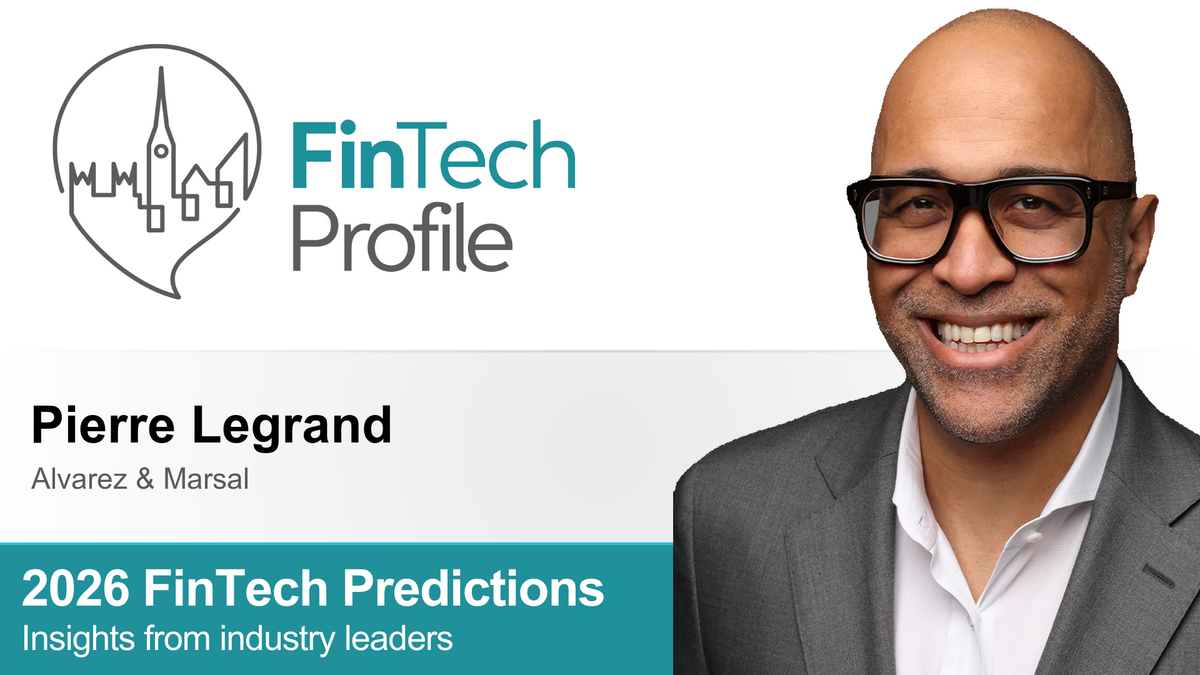
We spoke with Pierre Legrand, Managing Director of Digital Financial Services at Alvarez & Marsal, about the transformative shifts he expects to see across financial services in 2026.
With deep expertise in digital transformation and financial technology, Pierre shares his perspective on how programmable banking, agentic AI, and evolving customer expectations will reshape the competitive landscape for banks and non-bank financial institutions alike.
Over to you Pierre - my questions are in bold:
What's the biggest shift you expect across financial services in 2026?
A decisive move towards digital and programmable banking. Banks and NBFIs will shift from traditional transaction-led models to holistic money-management platforms designed for mass-affluent and upper-mass-affluent customers. Instead of simply enabling payments or deposits, institutions will compete on their ability to help customers plan, grow and optimise their wealth through personalised, AI-driven financial tooling.
Which emerging technology will have the most practical impact on banks and the FinTechs that support them?
Agentic AI capabilities that allow customers to self programme financial plans and delegate actions. These systems will automate tasks such as reallocating savings to higher-yield accounts or scanning the market for optimal refinancing opportunities, enhancing outcomes without requiring customers to become financial experts.
What customer behaviours or expectations will most challenge banks and financial service providers?
Customers will expect full visibility and active optimisation across their financial lives, not fragmented snapshots. The demand for a single, consolidated "flight deck" spanning deposits, investments, pensions, mortgages and savings will outstrip the pace at which many incumbents can integrate legacy systems, redesign journeys and ensure high-level security.
What risks or blind spots do you think the industry is underestimating as we move into 2026?
Many underestimate the operational and reputational risk of deploying programmable finance at scale. Automated decision-making increases exposure to model errors, data-quality issues and unclear accountability when algorithms act on customers' behalf. There is also a strategic blind spot – once customers can easily switch and automate optimisation, loyalty will weaken. Providers that are slow to deliver these tools and don't strike real human relations risk being relegated.
If you were advising a bank's leadership team today, what strategic priority should they focus on to stay competitive in 2026 and beyond?
Invest in building a trusted, unified digital wealth platform that integrates open-banking data, offers agentic financial controls and elevates the customer experience from service provision to active financial stewardship. The winners will be those that modernise infrastructure, secure data flows and design intuitive, premium-grade interfaces that feel less like traditional banking and more like a personal family office at scale. Lastly, build deep human relationship with your clients alongside those tools, don't underestimate the power to better understand their needs through data and technology.
Thank you Pierre! You can connect with Pierre on his LinkedIn Profile and find out more about the company at https://www.alvarezandmarsal.com.