2026 FinTech Predictions: Insights from Pantelis Kotopoulos of Bitpanda
Bitpanda's UK Country Director shares predictions on crypto adoption, regulatory shifts, and how digital assets are moving into mainstream banking in 2026.
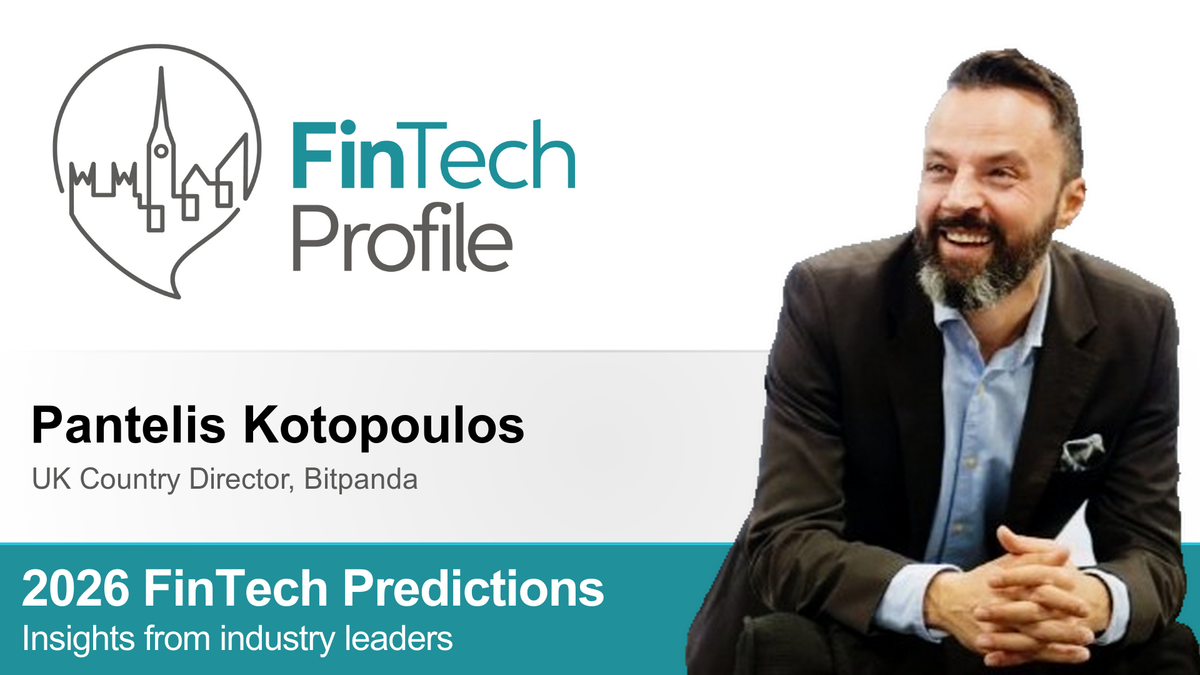
We spoke with Pantelis Kotopoulos, UK Country Director at Bitpanda, Europe's leading crypto platform, about the transformative shifts ahead for financial services.
As the UK's regulatory landscape evolves and crypto adoption accelerates, Pantelis shares his perspective on how digital assets are moving from specialist platforms into everyday banking.
Over to you Pantelis - my questions are in bold:
What's the biggest shift you expect across financial services in 2026?
In the UK, 2025 was defined by significant market growth alongside a proposed phased implementation of a comprehensive regulatory framework by the Financial Conduct Authority (FCA) and HM Treasury. The shift from a previously cautious regulatory environment, coupled with accelerating adoption of technologies from stablecoins to tokenized financial assets, sets the stage for the next growth cycle. In 2026, we expect to see wider adoption of crypto as an inflation hedge. 6.5 million Brits currently have cryptoasset investments, with one in five (22%) of these saying they have turned to digital assets to diversify portfolios and protect against inflation. Additionally, with one in seven (15%) Brits are planning to invest in crypto in the next year, this trend is likely to accelerate as traditional savings options face scrutiny and interest rates remain volatile.
Which emerging technology will have the most practical impact on banks and the FinTechs that support them?
One of the biggest shifts happening right now is how quickly crypto is becoming part of everyday financial services. Banks and major financial institutions are no longer just "exploring" digital assets, instead these organisations are building them directly into the products people already use. These developments show a clear trend, crypto is moving out of specialist platforms and becoming a standard part of how people save, invest, and move assets.
What customer behaviours or expectations will most challenge banks and financial service providers?
As digital assets move out of specialist platforms and become a standard part of how people save, invest, and move assets, users will expect seamless access, simple interfaces, and the same level of trust and security they associate with traditional banking. At the same time, growing investor interest—driven by diversification needs, inflation concerns, and the emergence of curated indices, thematic baskets, and tokenized products—means customers will expect banks to offer more sophisticated, regulated, and user-friendly digital-asset solutions. Meeting these expectations while maintaining strong compliance, education, and risk-management standards will be a core challenge.
What risks or blind spots do you think the industry is underestimating as we move into 2026?
A major blind spot is underestimating how quickly customer adoption is accelerating in response to inflation concerns, volatile interest rates, and broader awareness of digital assets. With 6.5 million Brits already holding crypto and a significant portion planning to invest in the next year, demand may outpace the ability of traditional institutions to integrate compliant, secure, and user-friendly crypto offerings. Another risk is assuming that innovation alone will drive growth; in reality, sustainable expansion depends heavily on education, financial literacy, and institutional-grade infrastructure. Platforms that fail to invest in these areas may struggle as the market matures and regulatory clarity raises the bar for quality and transparency.
If you were advising a bank's leadership team today, what strategic priority should they focus on to stay competitive in 2026 and beyond?
As the industry moves from niche to mainstream, the institutions that integrate digital assets seamlessly into everyday banking—supported by robust regulation, institutional-grade technology, and strong educational resources—will be best positioned for the next growth cycle. Leadership teams should focus on delivering clear, accessible, and well-regulated investment options, from crypto-related ETFs and ISA-eligible products to diversified indices and stablecoin-enabled payment solutions. The strategic priority is simple: prepare for a financial system where digital assets are not an add-on, but a standard component of how people save, invest, and move money.
Thank you Pantelis! You can connect with Pantelis on his LinkedIn Profile and find out more about the company at https://www.bitpanda.com.