2026 FinTech Predictions: Insights from Dave Dutch of Red Oak
Red Oak CEO Dave Dutch shares predictions on AI governance risks, rising client expectations for transparency, and the shift toward tax-advantaged investment products in 2026.
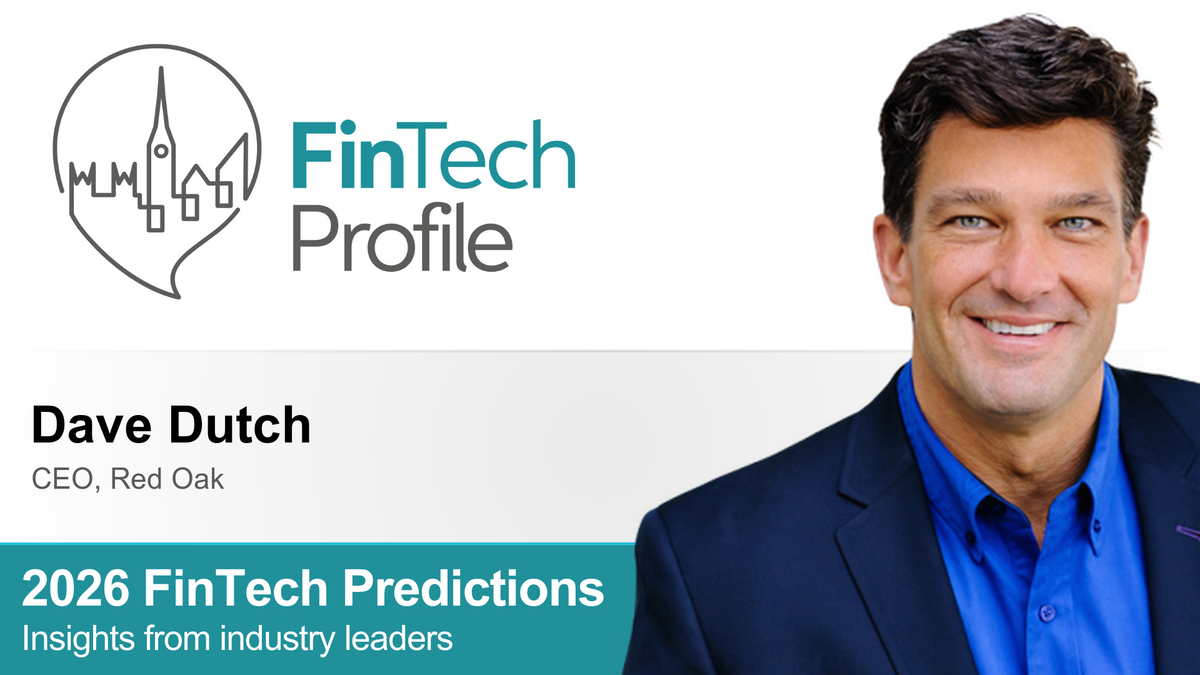
I spoke with Dave, CEO of Red Oak, the only modern compliance connectivity platform built for the financial services industry where content, review, distribution, and supervision work as one intelligent system.
Dave shares his perspective on the technological shifts, client behaviour changes, and underestimated risks facing wealth management and financial service providers as we move through 2026.
Over to you Dave - my questions are in bold:
What's the biggest shift you expect across financial services in 2026?
We expect to see a continued shift toward products that are tax advantaged, such as direct indexing and separately managed accounts (SMAs). Red Oak's compliance connectivity platform is made up of compliance, distribution and supervision platforms. In our distribution platform, 4U, we saw notable increases in advisor engagement with content related to direct indexing and separately managed accounts. Digging deeper, we see that educational content around these investment products was in high demand. As investment product trends shift, it's increasingly important for Investment Companies to provide clear, meaningful, compliant educational materials to help advisors position these products and strategies.
Which emerging technology will have the most practical impact on investment managers and the FinTechs that support them?
No surprise here - AI. AI won't replace compliance or supervision teams, but it will reshape how investment managers operate, moving them toward more proactive risk management, better documentation, and more defensible regulatory outcomes. New and existing advisors will have larger books of business and will need AI generated insights to ensure that recommendations are personalised and appropriate for their individual clients.
What customer behaviours or expectations will most challenge wealth management and financial service providers?
At a high level, the biggest challenge is meeting rising expectations for speed, transparency, and relevance across digital-first channels without eroding trust. In 2025, our data showed that advisors were challenged by the fast pace of policy decisions and the news cycle that accompanied them. Clients increasingly expect instant, highly personalised answers that feel more like a consumer tech experience than a traditional financial services interaction. Waiting days for clarity on performance, fees, or risk, no longer hits the mark. This puts pressure on firms to modernise service models while still preserving thoughtful, human advice. There is also a growing demand for radical transparency. Clients are far less tolerant of opaque pricing or jargon-heavy explanations. They expect clarity around: what they're paying, the risks they're taking, and how recommendations tie back to their personal goals. Transparency has become table stakes.
Another major shift we have observed is how clients form and build trust. Clients no longer rely solely on advisors; they are blending professional guidance with firm research, social media, and influencer content. That makes managing misinformation and staying relevant across multiple channels both harder and more critical. At the same time, especially among younger clients, there's a clear preference for education over persuasion. Firms that focus on teaching, context, and tools will build trust and stronger loyalty, while product-first messaging increasingly leads to disengagement.
Finally, clients have a much lower tolerance for misalignment with their values. Expectations around ethics, inclusion, data usage, and consumer protection are more pronounced, and missteps, particularly in digital and social environments, can quickly damage trust. Combined, these shifts are forcing firms to move away from product-centric models and toward relationship and education-led experiences that need to be delivered consistently across both human and digital touchpoints.
What risks or blind spots do you think the industry is underestimating as we move into 2026?
AI governance. Many firms are moving quickly to deploy AI for marketing, compliance, research, and client communications, but far fewer have clear ownership, controls, documentation, or escalation paths when something goes wrong. The risk isn't just bad output, it's undocumented decision-making, inconsistent use across teams, and the inability to explain how an AI-assisted conclusion was reached when clients, or regulators, ask. There's a growing assumption that AI will "catch everything," especially in compliance and supervision. However, poorly trained models, biased data, or weak human oversight can create blind spots that are harder to detect than traditional errors because they feel authoritative and scalable.
As firms expand into social media, AI-driven content, and faster digital interactions, small missteps, unclear disclosures, tone-deaf messaging, or misleading simplifications can scale quickly. The industry often underestimates how quickly trust can erode in digital environments compared to traditional advisor relationships. Tools are becoming more sophisticated, but the client's understanding isn't keeping pace. Without education, faster and smarter technology may actually increase risk-taking, fee confusion, and susceptibility to fraud, especially among newer and younger clients.
Firms also lack people who can bridge technology, compliance, and client experience. That disconnect can lead to policies that look good on paper but fail in practice. So, while AI governance is the headline risk, the deeper blind spot is assuming technology maturity equals organisational readiness. Firms that don't invest equally in governance, education, and human oversight may find themselves exposed in ways they didn't anticipate.
Thank you Dave! You can connect with Dave on his LinkedIn Profile and find out more about the company at www.redoak.com.