2026 FinTech Predictions: Insights from Carmine Evangelista of Auriga
Auriga's CTO shares his vision for software-defined banking, AI-driven operations, and the critical cybersecurity challenges facing phygital infrastructures in 2026.
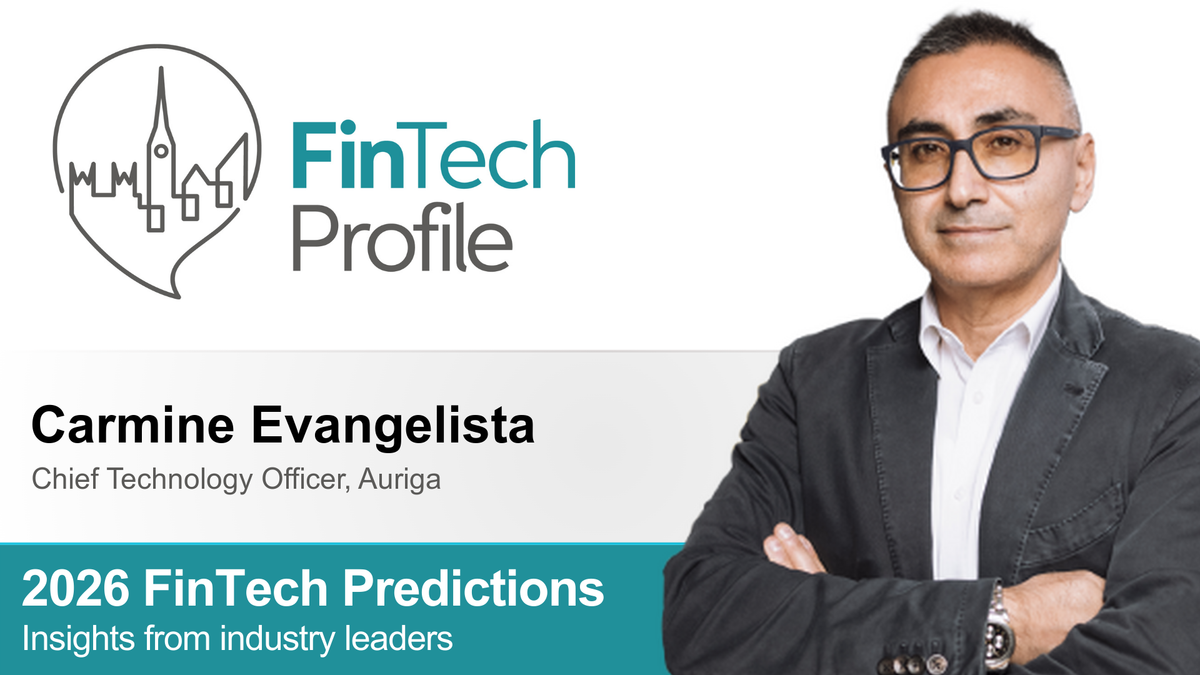
I spoke with Carmine, Chief Technology Officer at Auriga, a leading supplier of software and technology solutions for the banking and payments industries.
As CTO, Carmine leads the technical vision for omnichannel banking solutions that bridge physical and digital customer experiences. His insights reveal how banks must fundamentally rethink their infrastructure and security approach as we move into 2026.
Over to you Carmine - my questions are in bold:
What's the biggest technology shift you expect across financial services in 2026?
The most significant shift is a structural transition toward software-defined banking infrastructures. By 2026, the Branch of the Future will no longer be an isolated physical location but an integrated self-service environment where physical and digital touchpoints share the same service logic. The focus is moving from managing individual channels to a seamless omnichannel experience, ensuring that governance, security, and operational control remain consistent whether a customer is using a mobile app or an advanced ATM.
Which emerging technology will have the most practical impact on banks and the FinTechs that support them?
The most practical impact will come from Artificial Intelligence moving into operational execution and proactive monitoring. In 2026, AI's value will be found in its ability to handle complex tasks like network orchestration and anomaly handling within strict governance frameworks. For Auriga, this means leveraging Business Analytics and proactive monitoring (such as WWS Proactive Monitoring OMNIA) to turn data into a strategic resource, allowing banks to gain a competitive advantage through increased internal efficiency and optimised service delivery.
As a CTO, what do you expect will challenge banks and financial service providers the most?
The greatest challenge will be modernising technology while ensuring total operational continuity. Banks are under pressure to innovate and reduce operational costs through immediate process efficiency without destabilising mission-critical systems. Solutions like WWS Aura for financial and accounting reconciliation are essential here, as they provide concrete answers to challenges regarding operational stability and the simplification of complex banking flows. The goal is incremental transformation: integrating new tools into existing environments to strengthen, rather than disrupt, the bank's reliability.
What risks or blind spots do you think the industry is underestimating as we move into 2026?
A major underestimated risk is the increasing exposure of phygital banking infrastructures, specifically regarding malware threats to ATMs. As self-service devices become more connected and software-driven, they become attractive targets for cybercriminals. Traditional endpoint security is no longer enough; banks must adopt dedicated cybersecurity platforms, such as our Lookwise Device Manager, to protect these highly connected systems that sit at the intersection of payments and customer identity.
If you were advising a bank's leadership team today, what strategic priority should they focus on to stay competitive in 2026 and beyond?
I would advise them to prioritise a coherent, software-centric operating model that applies consistent control and orchestration across both digital and physical environments. This approach allows for a safe and predictable evolution, enabling banks to integrate new technologies responsibly and respond to regulatory pressures (like DORA/PSD2/Open Banking) without needing a constant architectural redesign. By focusing on a unified omnichannel strategy, leadership can ensure a personalised and secure customer experience that sustains long-term trust and competitiveness.
Think of this strategy as upgrading a city's power grid: instead of just giving every house a better lightbulb (a single-channel update), the bank is building a smart grid (a software-defined infrastructure) that can manage solar, wind, and traditional energy (all channels) from a single control centre, ensuring the lights stay on everywhere even as new energy sources are plugged in.
Thank you Carmine! You can connect with Carmine on his LinkedIn Profile and find out more about the company at www.aurigaspa.com.