2026 FinTech Predictions: Insights from Alvaro Morales of Flanks
Flanks Chairman Alvaro Morales shares his predictions for 2026, from data infrastructure priorities to AI implementation and the €85 trillion wealth transfer challenge.
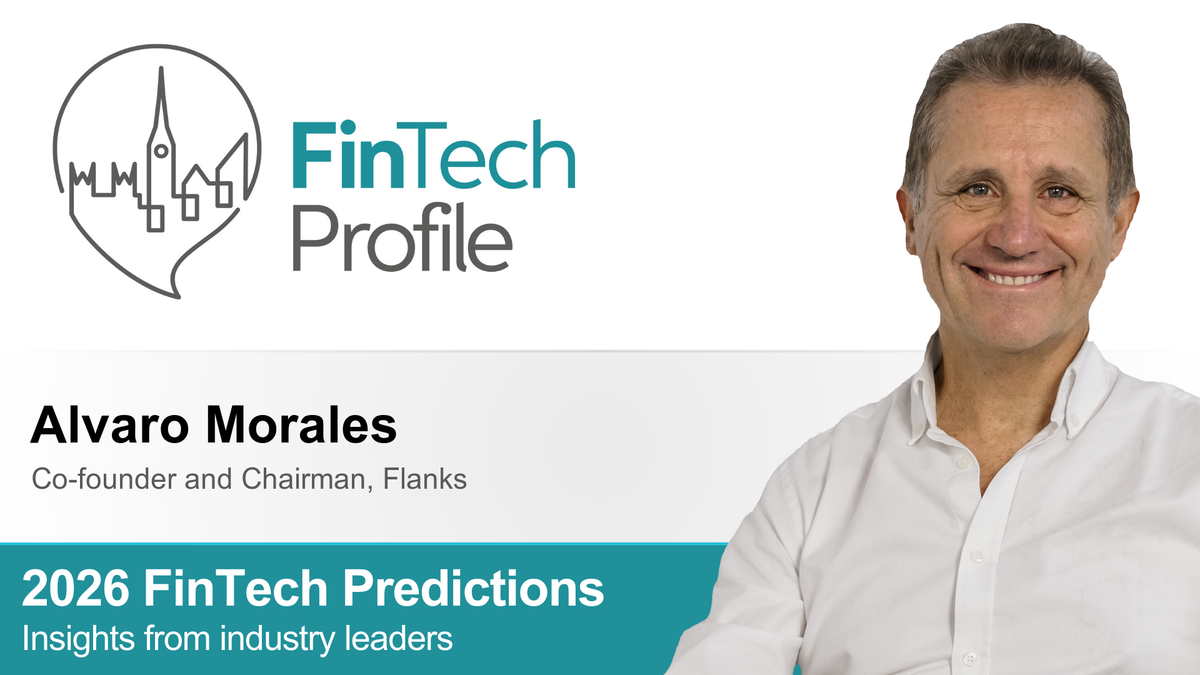
We spoke with Alvaro, Co-founder and Chairman of Flanks, a wealth management technology provider redefining the European advisory services industry. With 35 years of senior banking leadership experience, including serving as Global Head of Private Banking at Santander, Alvaro brings a unique perspective on the intersection of wealth management, data infrastructure, and AI adoption.
Over to you Alvaro - my questions are in bold:
What's the biggest shift you expect across financial services in 2026?
The biggest shift will be the industry finally accepting that data infrastructure comes before promising AI implementation, not the other way around. We've spent the past few years with everyone talking about AI adoption, but implementation remains almost zero. The reason is simple: you can't build reliable AI on unreliable data.
In 2026, I expect we'll also see institutions finally acknowledging that the €85 trillion wealth transfer is about fundamentally different client expectations. The next generation doesn't want relationship-based trust; they want evidence-based value, 24/7 digital access, and hyper-personalised advice. They expect the same level of service from their wealth manager as they get from Spotify or Netflix. AI has a part to play in this but it's not the only piece of the puzzle. Data is, here again, central.
Firms need to stop treating data aggregation as a back-office problem and start seeing it as the foundation for everything (and increasingly so in 2026): client reporting, AI deployment, regulatory compliance and competitive differentiation.
Which emerging technology will have the most practical impact on banks and the FinTechs that support them?
At the risk of sounding repetitive, it will definitely be AI! But not AI as chatbots or generic "copilots." When AI is done right - built on clean, unified data- the transformation is tangible and measurable. I'm talking about transformer models that automatically categorise transactions across hundreds of custodians, eliminating hours of manual work. Multi-agent systems that map heterogeneous data schemas with full explainability, where every decision includes an audit trail. Pre-delivery validation that detects anomalies before clients see reports, reducing reconciliation workloads massively.
But the real breakthrough will be natural language interfaces that allow advisors to query portfolios, reconcile transactions, and analyse exposures conversationally - all within controlled, auditable environments where data sovereignty is maintained. We see this already happening in production environments.
Success in this area will democratise services previously reserved for ultra-high-net-worth clients, making sophisticated wealth management accessible to the mass affluent market. That's where the real competitive advantage lies in 2026 and beyond.
What customer behaviours or expectations will most challenge banks and financial service providers?
The demand for portfolio aggregation across all their investments, not just those held at a single institution. This expectation emerged about 10 years ago when family offices began attracting clients by promising comprehensive portfolio management. Traditional banks have been playing catch-up ever since, but their manual processes make this practically impossible.
Think about the reality today: an advisor trying to give investment advice must first call the client asking for last month's statement, then wait 10 days for the client to receive it, scan it, and return it. By the time we analyse this information, it's 45 days old - a month and a half where the market has been moving while we've been flying blind.
The new generation won't tolerate this. They expect real-time visibility across all their holdings, from multiple custodians, in multiple countries, across every asset class. And with regulations like FIDA and PSD3 mandating standardised data access by 2026-2027, this expectation will only intensify.
What risks or blind spots do you think the industry is underestimating as we move into 2026?
The biggest blind spot is cybersecurity risk in the vendor ecosystem. With DORA now in force, FIDA coming up, and 76% of companies struggling with increased AI-powered attacks, firms are still granting access to sensitive client data to technology providers with minimal regulatory oversight.
Many wealth managers don't realise that unlike traditional custodians, numerous wealth tech providers operate under different regulatory frameworks - or sometimes none at all. Would you allow an unregulated entity to hold your clients' physical assets? Of course not. Yet firms routinely grant access to equally sensitive financial data to providers who claim "partnership" with licensed entities or suggest their services fall outside regulatory scope.
These arrangements might seem attractive - they're often cheaper. But they transfer enormous risk to your firm. The recent ransomware attack on a major European wealth tech provider, where client data and encryption keys were dumped online, didn't have to happen. It was the result of bad choices rather than technical inevitability.
If you were advising a bank's leadership team today, what strategic priority should they focus on to stay competitive in 2026 and beyond?
After 35 years in wealth management, including CEO roles at Santander's private banks across three continents, I can tell you that technology is probably the best investment a private banking entity can make. When you increase the productivity and efficiency of your bankers, you increase the bottom line dramatically.
But the reality is that most wealth management operations still run on siloed data systems and manual, error-prone processes.
So, my advice is threefold:
First, invest in scalable data aggregation that can connect to custodians globally across all methodologies - APIs, credential-based access, report ingestion. Centralise your data infrastructure to make the most of AI implementation across your systems - and stop working in siloes.
Second, ensure your technology partners are properly regulated and FIDA and DORA-compliant. Check regulatory status, certifications, authentication models, data sovereignty, and audit trails. If a provider gets defensive when you ask about incident response, that tells you everything you need to know.
Third, invest in AI as augmentation, not replacement. The human advisor isn't going away - money is like health, and people want a human face managing both. But AI should handle the complexity, data analysis, and routine tasks so advisors can focus on judgement, emotional intelligence, and strategic conversations.
Thank you Alvaro! You can connect with Alvaro on their LinkedIn Profile and find out more about the company at www.flanks.io.